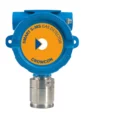
Hiring can be a sensible option for short-term works such as planned maintenance, shutdowns, investigations, or temporary changes to process conditions. It also helps when you need additional monitors for a specific task or area without committing to purchase, while keeping capability available for rapid mobilisation and changing site priorities.
When Is Hydrazine Gas Monitoring Required?
Monitoring is typically required anywhere hydrazine is stored, handled, transferred or could be released, especially during higher-risk activities like maintenance, equipment cleaning, sampling, waste handling, and spill response. It is also important in areas where ventilation may be limited and exposure could develop without obvious warning. Hydrazine detection can be technically challenging at very low concentrations, and performance may be affected by humidity, cross-sensitivity to ammonia and other amines, and slower response or recovery times in some sensor types, so the monitoring approach should be matched to the task.
Typical Hydrazine Monitoring Applications
- Aerospace ground operations: fuelling, defuelling, servicing and leak checks around propulsion systems
- Boiler and water treatment dosing areas where hydrazine is used as an oxygen scavenger
- Maintenance on closed transfer lines, pumps, valves and storage systems where leaks can occur
- Process manufacturing tasks involving hydrazine as an intermediate (for example pharmaceutical or agrochemical synthesis support activities)
- Area surveys following a suspected release, including checks before re-entry and restart
- Surface contamination or decontamination verification where aqueous solutions may be present and vapour sensors can be less reliable
- Tasks where ammonia may also be present and you need to avoid misleading readings from cross-sensitivity
Which Hydrazine Monitor Should I Hire?
Electrochemical personal monitors for day-to-day exposure awareness
Electrochemical sensors are widely used for workplace hydrazine monitoring and can provide real-time quantitative readings when correctly calibrated. They are often suited to routine working areas and task-based checks, but can be affected by humidity and temperature variation, may show cross-sensitivity to ammonia and other amines, and some instruments have slower response and recovery.
Where a compact, single-gas format is appropriate, the Dräger X-am 5100 is one option we can support as part of an electrochemical monitoring approach.
Spot checks with colourimetric detector tubes
Detector tubes can be useful for rapid, visual, semi-quantitative spot sampling during checks, surveys or initial assessment. They have limitations including cross-sensitivity (notably with ammonia), sensitivity to humidity and temperature, and uncertainty compared with electronic monitoring. Typical tube ranges may not reliably resolve very low occupational limit values, so they are not always suitable as the only control where tight limits apply.
PID screening and why interpretation matters
Photoionization detectors (PIDs) can respond quickly to hydrazine because its ionisation energy is within the capability of common PID lamps. However, PIDs are not selective and readings can be influenced by humidity and other compounds, so they are better treated as a screening tool with careful interpretation rather than a definitive hydrazine-only measurement method.
Low-level and high-specificity detection in complex environments
Ion mobility and differential mobility spectrometry can detect very low concentrations and can help differentiate hydrazine from ammonia, but these techniques are sensitive to humidity and temperature and are generally more complex and maintenance-intensive. In environments where diluted aqueous hydrazine may be present, vapour detection can be less reliable because vapour pressure is depressed, so qualitative surface and liquid indicators may be considered as part of a broader monitoring plan.
If you tell us where hydrazine may be present, the work being carried out, and whether ammonia or high humidity is expected, we can advise on a practical monitor selection and hire package, including n24h monitor hire where it genuinely fits the monitoring need.